
Most moving companies lose bookings not because their price is wrong, but because their call is wrong. An uncertain opening, scattered discovery questions, or an unprepared response to "that seems expensive" — any one of those is enough to lose a lead you already paid for. In 2026, when a shared lead goes to up to four companies simultaneously, the mover who calls first and sounds most professional wins the job.
A solid moving company sales script solves both problems at once. It builds the confidence to call immediately and delivers a consistent, professional experience on every call — whether you are a solo owner-operator or managing a team of five reps. For the follow-up timing and SMS templates that run alongside these calls, pair this guide with our deep dive on how to follow up with moving leads. And if you want to use AI to generate variations and customizations, see our guide on using ChatGPT for moving company sales scripts.
Quick-reference: the complete call structure
| Call Stage | Goal | Target Time |
|---|---|---|
| Opening | Establish identity, earn 30 more seconds | 30 seconds |
| Discovery | Learn move details, surface concerns | 3–5 minutes |
| Value building | Differentiate before the price comes up | 1–2 minutes |
| Quote presentation | Frame the number with confidence | 1 minute |
| Objection handling | Address concerns without dropping price | 1–3 minutes |
| Close | Secure a booking or a clear next step | 1 minute |
| Total target length | 8–12 minutes |
Why a Moving Company Sales Script Is Your Highest-Leverage Tool
Consistency is what a script delivers — not rigidity. Every call follows the same proven structure, so you know exactly where a call is succeeding or breaking down, and coaching becomes concrete instead of intuitive.
Here is what changes when your team works from a structured moving company sales script:
- New hires get productive faster. A rep with a script is functional within one week. Without one, it takes months of trial-and-error before instincts develop.
- Close rate becomes predictable. Moving from 1-in-8 to 1-in-5 on the same lead spend means 60% more revenue with no additional marketing budget.
- Objections stop being surprises. When every common pushback already has a scripted response, nothing on the call catches you off guard.
- The business survives personnel changes. If your best closer leaves, the script stays. The system drives performance, not the individual.
- You can identify exactly where calls stall. Record calls, listen back, and find the moment things go sideways — then fix that one section.
Research on lead response published by InsideSales.com (now XANT) has consistently shown that companies calling within five minutes of a lead submission connect and convert at dramatically higher rates than those who wait even 30 minutes. A confident script is what makes that immediate call possible — you never hesitate because you always know what to say.
If you want to fill your pipeline so there are always calls to make, start with verified moving leads that are screened for intent before they reach you.
The Perfect Opening: How to Nail the First 30 Seconds
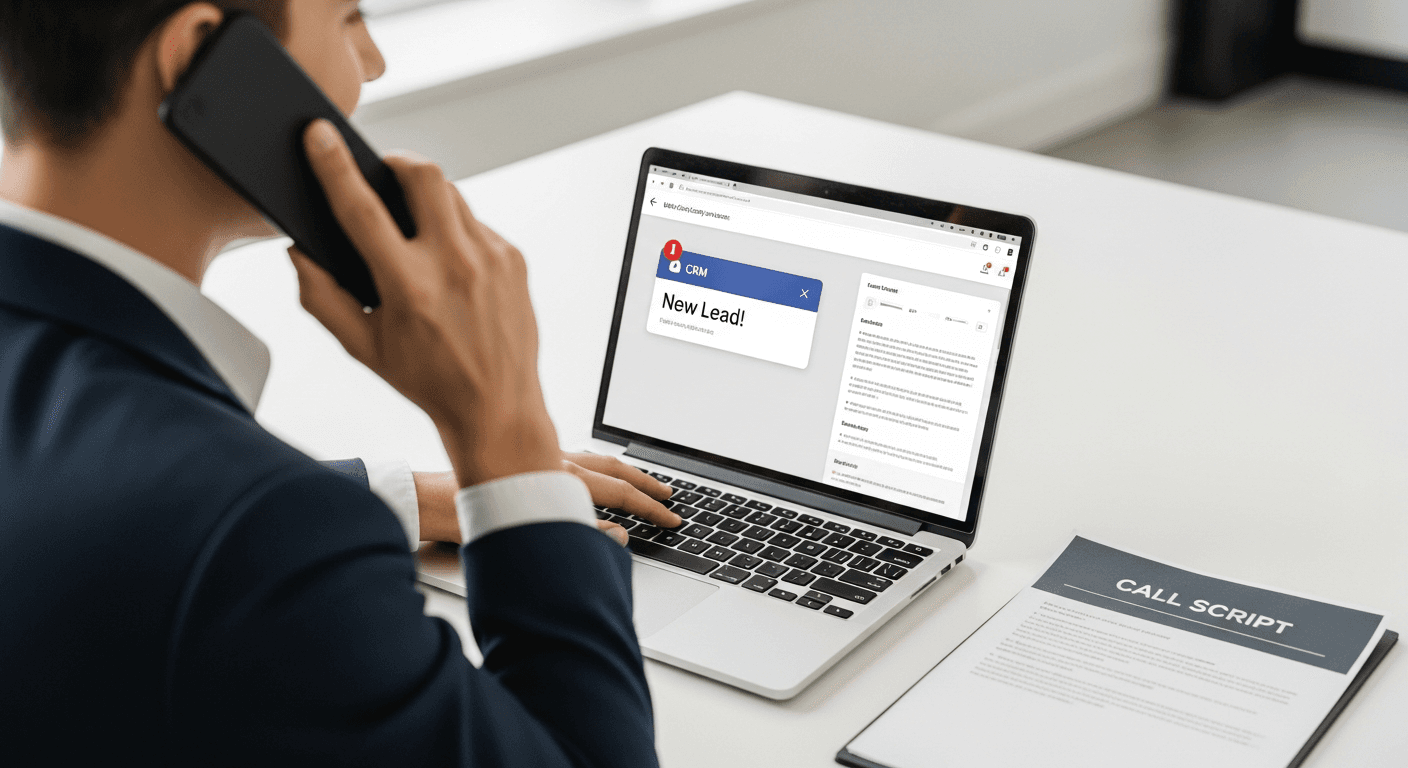
The opening determines whether you get the next five minutes or a polite hang-up. Most movers waste it by starting with "Hi, how are you today?" — an instant signal that this is a sales call, not a service call.
The Inbound Lead Opening (They Just Submitted a Form)
Use this the moment you receive a lead notification:
You: "Hi, is this [Customer First Name]? Great — this is [Your Name] with [Company Name]. I'm calling because you just requested a moving quote on our website. I want to make sure I get you the most accurate estimate possible. Do you have about five minutes right now?"
Why this works: you use their first name immediately (personal), you explain exactly why you are calling (no mystery), you frame the call as serving them rather than selling to them, and you ask permission before diving in.
The Warm Lead Opening (Called Earlier, No Answer)
You: "Hi [Name], this is [Your Name] calling back from [Company Name]. I left you a voicemail earlier about your moving quote. I just wanted to make sure you got connected with someone — did you still need help with your move?"
Opening Do's and Don'ts
| Do | Don't |
|---|---|
| State your name and company immediately | Start with "How are you today?" |
| Reference the quote request directly | Ask "Is this a good time?" (sounds tentative) |
| Ask a permission question to open | Launch straight into your pitch |
| Sound warm and confident | Sound robotic or rushed |
| Call within five minutes of the lead | Wait hours or days to reach out |
Pro tip: When you receive a lead notification, call within five minutes. Say "I'm calling because you just submitted a quote" — that word "just" signals responsiveness that immediately separates you from movers who call two days later. Speed is trust before a single word of your pitch lands.
Discovery Questions That Reveal What Your Customer Really Needs
Discovery is the most important — and most skipped — part of the moving sales call. Reps who skip straight to price end up competing on price alone. Reps who ask the right questions understand what the customer really values and can sell to that specific concern.
The goal of discovery is to learn three things:
- The logistics of the move (what, where, when, how big)
- The customer's top concern (price, reliability, belongings protection, timing)
- Any complications that affect your estimate (stairs, piano, storage, restricted access)
Core Discovery Questions
Work through these conversationally — not as a checklist you read aloud:
Move logistics:
- "Where are you moving from, and where are you headed?"
- "What date are you planning to move — or are you flexible on timing?"
- "Can you describe the home you are moving out of? Is it an apartment, house, or condo, and how many bedrooms?"
- "Do you have any large or specialty items — piano, pool table, gun safe, gym equipment?"
Concerns and priorities:
- "What matters most to you in choosing a moving company — is it price, availability on your specific date, or protecting your belongings?"
- "Have you moved with a company before? Was there anything that did not go well that you want to avoid this time?"
Practical details:
- "Are there stairs at either location? Any long hallways or tight doorways?"
- "Will you be packing yourself, or are you looking for packing services as well?"
- "Is there anything going into storage, or does everything go directly to the new place?"
The question "What matters most to you?" is the most powerful one on this list. The answer tells you exactly how to close the call. If they say "reliability" — anchor your value-building around reviews and experience. If they say "price" — anchor it around transparency and no surprise fees.

How to Build Value Before Quoting Your Price
This is the step most movers skip, and it is why so many sales calls turn into pure price negotiations. Value building happens in the 60 to 90 seconds between discovery and the quote. It changes how the customer hears your number.
Use the information from discovery to connect your services to their specific concern:
If they care about reliability:
"Based on what you told me, here is what we will do for your move: two experienced crew members who have completed hundreds of moves in [City]. We carry full liability insurance and cargo coverage for your belongings. We use moving blankets, floor runners, and shrink wrap on all furniture — at no extra charge. You will get a booking confirmation and a call from your crew the morning of the move."
If they care about price:
"I want to make sure you are getting real value, not just the lowest number. Our rate includes the truck, all equipment, and a two-man crew. There are no surprise fees — what I quote you is what you pay. And if anything changes on move day, we call you before adding a single charge."
If they had a bad experience previously:
"I hear that a lot, and I want to make sure we do this differently. Tell me — what specifically went wrong? [Let them answer.] Here is how we handle that situation: [address it directly using their exact words]."
The goal is not to brag about your company. It is to mirror the customer's own concern back to them and show precisely how your service solves it.
The Quote Presentation: Frame Your Price for Maximum Conversions
Never just state a number and wait in silence. Present the quote in a frame that anchors value before price, so the number lands in the right context.
The Quote Script
You: "Based on everything you have told me, here is what I recommend for your move: a [3/4/5]-hour booking with two experienced movers. That includes the truck, all equipment, full coverage for your belongings, and no hidden fees. Your estimate is [$XXX to $XXX]. Does that timeline work for your budget, or would you like to talk through any adjustments?"
Ask a question immediately after the number — never let silence sit there.
Three Rules for Quoting
- Lead with the deliverable, not the number. Say what they get before you say what it costs.
- Give a range, not a hard floor. "Between $450 and $550" feels safer than "$450 minimum" and sets a slightly higher anchor.
- Ask a question immediately after quoting. Silence after a price is uncomfortable and invites hang-ups. A question keeps the conversation moving.
| What to Say | What to Avoid |
|---|---|
| "Your estimate is $450 to $550, which includes..." | Saying just "$450" and stopping |
| "Does that work for your budget?" | Waiting silently after the number |
| Range framing: "$450 to $550" | Floor framing: "Starting at $450" |
| "Let me walk you through what's included" | Rushing past the value items |
Objection Handling: Scripts for Every Common Pushback
Objections are not rejections — they are requests for more information or reassurance. A pre-built response to each means you never freeze, and you never drop your price out of panic.
"That Seems Too Expensive"
You: "I hear that — and I want to make sure you're comparing apples to apples. The estimate I gave you includes [list your inclusions]. A lot of companies quote a lower rate but charge extra for the truck, travel time, or supplies. Can I ask — what number were you hoping to be around?"
Let them answer. Then:
You: "Got it. What I can do is [small adjustment if your margin allows / explain what drives the rate]. What I can't do is cut corners on your move — because that's where damage happens and move day turns into a nightmare. What I can promise is that every dollar you spend with us is money you won't have to spend fixing problems afterward."
"I'm Getting a Few More Quotes"
You: "That makes complete sense — you should absolutely compare your options. While you are doing that, let me make it easy to come back to us. Can I email you the details of what I just quoted so you have it in writing? And if you find someone offering the exact same service for less, call me back — I want to earn your business."
Then: get their email. That email keeps you in the consideration set even after the call ends.
"I Need to Think About It"
You: "Of course. What specifically are you thinking through — is it the price, the date, or something else? Because if there is a question I haven't answered, I'd rather answer it now while I have you on the phone."
If they genuinely need time:
You: "No problem. I'll hold this estimate until [48 hours / their move date minus two weeks] — after that I can't guarantee availability on your move date. Should I call you [tomorrow at this time] to follow up?"
"Can You Come Down on the Price?"
You: "I want to earn your business. The one thing I can't compromise on is the crew size and equipment — that's what protects your furniture. What I can do is [offer a small discount / waive a fee / lock in today's rate for 30 days]. Would that work for you?"
Pro tip: Never drop your price without getting something in return. Make the concession conditional on closing right now: "If I can do [$X], can we go ahead and get you booked today?" A discount that does not produce a booking is just margin you gave away.

The Close: Asking for the Booking the Right Way
Most moving sales calls fail at the close — not because the customer said no, but because the rep never asked. The close is not aggressive; it is the natural transition from "here is what we offer" to "let's get this locked in."
The Assumptive Close
You: "Based on everything you've told me, I think we're the right fit for your move. Let's go ahead and get your date reserved — I'll send a confirmation and all the details to your email. What's the best email address for you?"
The assumptive close works because it does not ask "do you want to book?" — it assumes booking is the natural next step and simply asks for the email address.
The Alternative Close
You: "We still have [Saturday] and [Sunday] open on your move weekend. Which one works better for you?"
Giving two yes-options removes the yes-or-no dynamic entirely.
The Soft Close (When They Are Not Ready)
You: "I understand you want to review one more quote. Let me call you back on [specific day and time] — I'll hold today's pricing until then. Does that work?"
Always close for something specific — a booked job, a confirmed follow-up, or an email so you can send the quote in writing. Never end a call without a defined next step.
The Follow-Up Call: Converting Leads Who Did Not Book the First Time
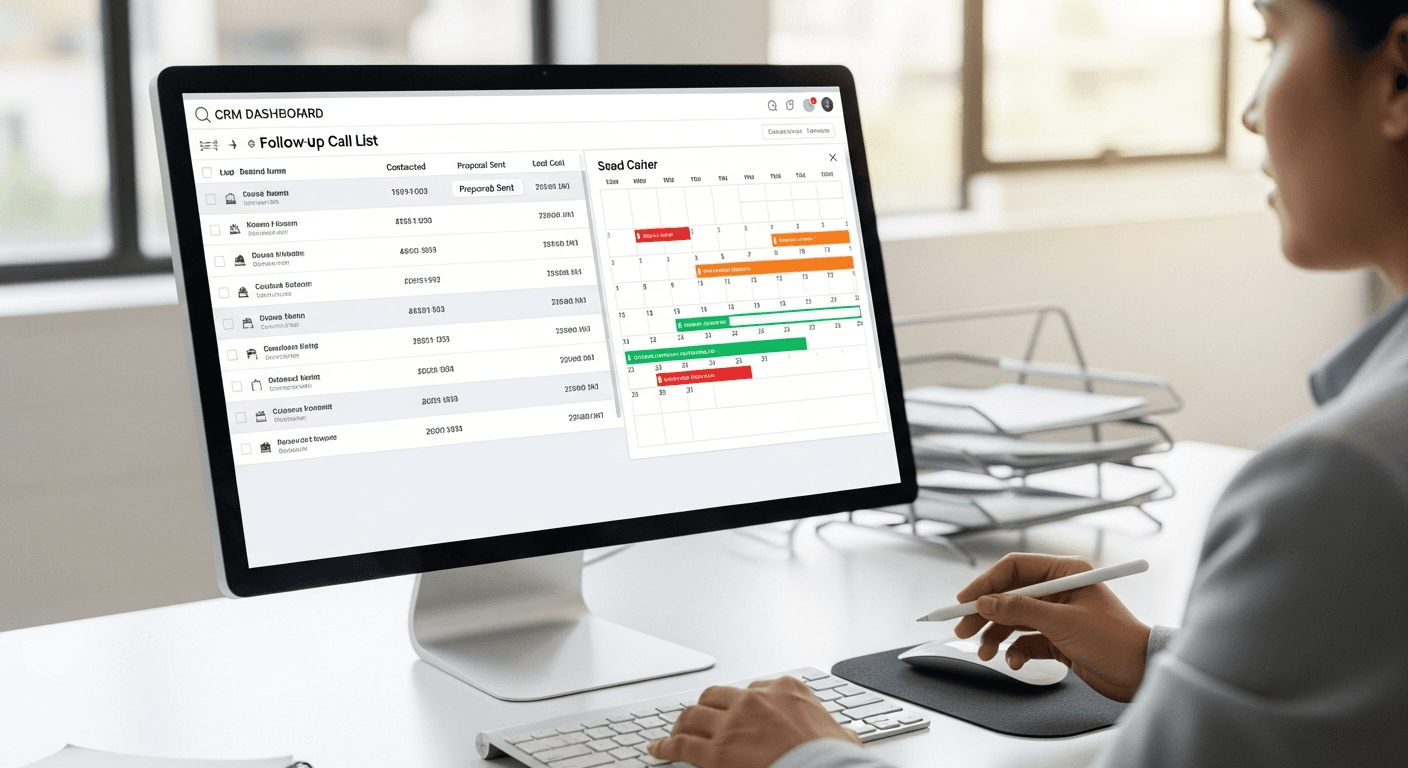
Most jobs are not booked on the first call. The follow-up sequence is where you recover customers who were interested but not yet ready.
Day 2 Follow-Up Call
You: "Hi [Name], this is [Your Name] from [Company Name] — we spoke yesterday about your move on [date]. I wanted to follow up to make sure you had everything you needed to move forward. Do you have a quick minute?"
If they raise objections: use the objection handling scripts above. If they have already booked elsewhere: "No problem at all — I hope your move goes smoothly. Please keep us in mind for the future." Always end professionally — they may refer someone else to you.
Day 5 Final Follow-Up
You: "Hi [Name], I know you're in the middle of planning your move. I wanted to reach out one last time because I'm about to release the spot we were holding for [date]. If you'd still like us to handle your move, I can confirm everything right now. If you've already found a company, no worries — just let me know so I can free up the slot. Either way, I appreciate you reaching out to us."
This message creates gentle urgency (releasing the reserved slot) without pressure. It also gives them an easy out — which paradoxically makes them more likely to respond.
For the full multi-touch follow-up system including text and email templates, see our guide on how to follow up with moving leads.
Voicemail Scripts That Actually Get Callbacks
Most customers will not answer the first call. Your voicemail is not a dead end — it is a trust signal and a scheduled callback trigger. Keep it short, specific, and confident.
First Voicemail (Same Day as Lead)
"Hi [Name], this is [Your Name] with [Company Name]. I'm calling about the moving quote you requested — I have your estimate ready and wanted to go over a few details to make sure it's accurate for your move. I'll also send you a quick text. Give me a call back at [Phone Number] — I'm available until [time] today. Talk soon."
Immediately after: send this text: "Hi [Name], this is [Your Name] from [Company Name]. Just left you a voicemail about your moving quote. Reply here or call me at [phone] — happy to answer any questions."
Second Voicemail (Day 3)
"Hi [Name], [Your Name] again from [Company Name]. Following up on your moving quote for [month or move date]. I want to make sure you have everything you need to make your decision. Call me at [phone] when you get a chance — I'll make time for you. Hope to hear from you soon."
Keep the second voicemail shorter than the first. The goal is to stay on their radar without sounding desperate.
Pro tip: Never leave more than two voicemails. After two missed calls and two voicemails, switch to text and email only. Repeated voicemails signal desperation, not professionalism — and they train customers to ignore you.
How to Customize This Script for Your Company
This script is a starting point, not a straitjacket. Here is how to make it yours:
- Replace generic inclusions with your actual differentiators. Guaranteed arrival windows? Flat-rate pricing? Specialty item expertise? Write those into your value-building section specifically.
- Adjust the quote framing for your pricing model. Hourly, flat-rate, and weight-based quotes each require slightly different framing in the presentation.
- Record real calls and listen back. Find the exact moment where calls stall — that is the one section of the script that needs a new branch or a stronger answer.
- Add your specific review numbers. "We have 300 five-star Google reviews" is a trust signal. Drop it into the value-building section with your real number.
- Practice with role play. Run weekly practice calls with your team. Rotate who plays the customer and throw a new objection each time. Scripts only work when they are practiced enough to sound natural.
Frequently Asked Questions About Moving Company Sales Scripts
Should my script be different for shared leads vs exclusive leads?
Yes. With shared leads, speed and confidence in the first 30 seconds matter most — you are likely competing with three other movers calling the same person simultaneously. With exclusive leads, you have more time to build rapport in discovery since the customer is not also talking to competitors. Adjust your pace: faster and more urgent for shared leads, more thorough and consultative for exclusive leads.
How long should a moving sales call be?
Target 8 to 12 minutes for a call that ends in a booking or a clear next step. Calls under five minutes usually mean discovery was skipped. Calls over 20 minutes typically signal the rep is over-explaining or failing to advance toward the close.
What is the best time to call a moving lead?
Research consistently shows that calls within the first five minutes of a lead submission have the highest connection and conversion rates. For general follow-up, late morning (10–11 AM) and late afternoon (4–6 PM) in the customer's local time zone tend to produce the best answer rates. Avoid calling before 8 AM or after 7 PM.
What if I cannot call every lead within five minutes?
Set up an automated text that fires the moment a lead is received: "Hi [Name], this is [Company]. We got your quote request and someone will be calling you in the next few minutes." This buys you time while signaling responsiveness. Most moving company CRMs and software platforms can trigger this text automatically as soon as a new lead arrives.
The Bottom Line
A moving company sales script is the single highest-leverage tool you can put in place today. It costs nothing but a few hours to build and refine, and the payoff is immediate: higher close rates on every lead, more consistent calls across your whole team, and a business that does not depend on one or two natural salespeople to survive.
Start with the scripts in this guide. Record your calls. Identify where they stall. Adjust the language to fit your voice and your market. Then practice until every word sounds like your own.
The only thing you need to run this system at full speed is a steady supply of leads to call. Network Leads connects moving companies with verified, high-intent customers who are actively requesting moving quotes — so your team always has real calls to work with. Start receiving leads today — no long-term contracts, pay only for the leads you receive.
Written by
Network Leads
Network Leads helps moving companies grow with high-quality leads, powerful software, and marketing solutions. Since 2017, we have been connecting movers with customers who are actively searching for moving quotes.
Learn more about our platform